
The Indian corporate bond market witnessed a significant surge, with companies raising nearly Rs 16,000 crore in a single day, primarily led by state-owned financial institutions and NBFCs. This strong momentum, driven by improved borrowing conditions and investor confidence, is expected to persist.

Indian benchmark stock indices, Sensex and Nifty, experienced mixed trading following the introduction of a new Closing Auction Session (CAS) for shares with futures and options (F&O) contracts, aimed at enhancing price discovery transparency. Track Sensex, Nifty on August 4

The recent surge in crude oil prices could shave off the gains made by India Inc in profit margins in the past few quarters. Worse, it comes at a time when consumer demand in the country is slipping and major global economies are witnessing a slowdown. A back-of-the-envelope calculation suggests that the margin expansion accounted for three-fourths of the rise in the listed firms' operating profit between the April-June quarter (Q1) of FY23 and Q1FY24, and only a quarter of profits gains came from revenue growth.

'If the war continue for a longer period of time, it is just a matter of time before the government will pass on some of the price increases.'
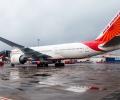
Air India group announces fuel surcharges on domestic and international flights due to rising Aviation Turbine Fuel (ATF) prices, following the government's decision to cap domestic ATF price hikes.

Asian Development Bank (ADB) on Friday warned that India's limited crude oil reserves of about 100 million barrels - sufficient for only 40-45 days of consumption - leave the country particularly vulnerable to supply disruptions through the Strait of Hormuz amid the ongoing war in West Asia.

'As long as the vehicle has a flex engine, it is irrelevant if the mixture is 15 per cent or 30 per cent; the performance is the same.'

From the Sensex pack, Sun Pharma, Eternal, Tata Motors, Bajaj Finance, IndusInd Bank and Bajaj Finserv were among the major laggards. In contrast, Tech Mahindra, Infosys, Asian Paints and Maruti were among the gainers.

India significantly increased its crude oil imports from Russia and the United Arab Emirates in June, securing supplies as the Strait of Hormuz began to reopen, with Russian barrels remaining attractive due to discounts and UAE supplies offsetting earlier uncertainties.

That means making it easier to invest, protecting investors through predictable rules, and avoiding policy reversals after investments have been made, notes Rajeswari Sengupta.

The Indian rupee weakened against the US dollar due to a strengthening dollar, high crude oil prices, and foreign fund outflows amid geopolitical uncertainties.

Indian benchmark indices Sensex and Nifty rebounded in early trade, tracking a recovery in global equity markets and an easing of hostilities between Israel and Iran, after a sharp fall in the previous session.

Cognizant reported a 1.4 per cent year-on-year dip in net profit for the April-June quarter to $636 million, while revenue grew 4.5 per cent to $5.5 billion. The company has also cut the top end of its annual guidance, citing a slowdown in macroeconomic conditions and rising uncertainty.

'The real shock is going to be from a deficient monsoon.'

Air India Group anticipates the delivery of 50-60 new aircraft within the next 18 months, with its ambitious transformation programme progressing despite global challenges like supply chain issues and geopolitical tensions, according to Chief Commercial Officer Nipun Aggarwal.

India's retail inflation rose to 4.38 per cent in June, driven primarily by costlier food items, pushing it above the Reserve Bank of India's median target of 4 per cent for the first time under the new series.

Indian stock market benchmark indices Sensex and Nifty experienced a significant decline, driven by escalating tensions in the Middle East and rising crude oil prices.

US Energy Secretary Chris Wright said that long-term oil supplies are 'abundant' and there are no worries regarding that, but in the short term, there is a need to get oil on the market.

Indian benchmark stock indices, Sensex and Nifty, recorded their fourth consecutive day of declines, driven by selling in FMCG, financial, and auto sectors. The downturn is attributed to fresh tensions in the Middle East, uncertainty surrounding the US-Iran 60-day ceasefire, and elevated crude oil prices.
A bipartisan group of US senators has introduced a comprehensive bill imposing extensive sanctions on Russia, with India identified as one of five countries that could incur tariffs for its continued purchase of Russian oil.
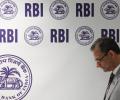
India Ratings and Research predicts the Reserve Bank of India (RBI) will maintain the repo rate at 5.25 per cent throughout FY27, despite potential inflationary pressures from higher fuel prices, with inflation expected to remain within the central bank's tolerance band.

Bessent indicated that the U.S. is evaluating the status of Iranian oil as the current campaign progresses.

The International Energy Agency (IEA) has proposed immediate demand-side measures, including remote work, lower speed limits, and reduced air travel, to mitigate the impact of a global oil supply shock caused by Middle East disruptions.

'Every year we import approximately $70 billion worth of gold -- closer to $72 billion in 2025-2026, an all-time record.' 'There is no parallel for this anywhere in the world. And this love for gold will not disappear overnight.'

Indian benchmark indices Sensex and Nifty ended a four-day rally, closing lower on Tuesday following the introduction of a new Closing Auction Session (CAS) for F&O stocks, which has added a layer of volatility and led to an early adjustment in market structure.
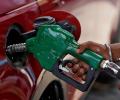
Petrol diesel price today March 20, 2026: IOCL & HPCL hike premium petrol (XP95, Speed, Power) by 2/litre and industrial diesel by 22/litre. Regular petrol in Delhi 94.77, diesel 87.67 unchanged. Full city-wise rates inside.

Indian equity markets experienced a significant decline in early trade, with the BSE Sensex and NSE Nifty dropping, as escalating geopolitical tensions in West Asia and a surge in global oil prices dampened investor sentiment. Track Sensex, Nifty50 movement and key market drivers for May 8, 2026.

Indian benchmark equity indices, the BSE Sensex and NSE Nifty, experienced a significant drop in early trade due to elevated oil prices, weak global market trends, and renewed fears of military operations in the Middle East following US President Donald Trump's statements regarding Iran. Track Sensex, Nifty on May 20.

Benchmark equity indices Sensex and Nifty ended lower on Monday as renewed hostilities between the US and Iran and rising oil prices unnerved investors. The 30-share BSE Sensex declined 372.10 points, or 0.48 per cent, to settle at 76,728.37.

India will continue to purchase Russian oil based on commercial viability and energy security needs, irrespective of US sanctions waivers, according to a senior petroleum ministry official.

Indian benchmark indices Sensex and Nifty closed flat, paring early gains due to renewed hostilities between the US and Iran, which unsettled investor sentiment and led to profit booking in metal, oil & gas, and telecom shares.

Tata Consumer Products reported healthy revenue growth in Q1 FY27, driven by its India branded business and accelerating momentum in newer segments, which are now expected to sustain double-digit sales growth and improve profitability.

The Indian rupee is highly vulnerable among Asian currencies, with Barclays and MUFG warning of a potential depreciation towards 100/$ if the West Asia conflict persists, driven by widening current account deficits and elevated crude oil prices.

Indian benchmark indices, Sensex and Nifty, rebounded in early trade after two days of decline, driven by positive global market trends and strong buying in auto stocks. This recovery follows a robust performance in US markets and a rally in Asian markets, particularly Japan's Nikkei, fueled by AI-driven technology optimism. Track Sensex, Nifty on July 1.
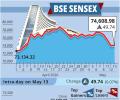
Indian benchmark equity indices, Sensex and Nifty, closed marginally higher, breaking a four-day losing streak, despite elevated crude oil prices and ongoing geopolitical uncertainties. The market saw a temporary pause in panic selling, though cautious sentiment persists.

Moody's Analytics predicts India will remain the fastest-growing major economy in 2026 and 2027, but its pace will moderate due to a global slowdown, geopolitical risks, and financial market volatility, despite the boost from AI demand.
Petrol diesel price today March 20, 2026: IOCL & HPCL hike premium petrol (XP95, Speed, Power) by 2/litre and industrial diesel by 22/litre. Regular petrol in Delhi 94.77, diesel 87.67 unchanged. Full city-wise rates inside.

Analysts are revising down India Inc's financial year 2026-27 (FY27) earnings growth forecasts, citing persistently high crude oil prices above $100 a barrel due to the West Asia conflict, which is expected to dent corporate financial performance in the coming quarters.

'I don't see fear becoming a dominant factor for retail investors.'

The Sri Lankan government attributes the sharp depreciation of the rupee against the US dollar to the ongoing conflict in West Asia, citing increased costs for essential imports like gas, fertiliser, and oil.
